The region of Ohio containing Bedford was a previous possession of the colony of Connecticut, though this was disputed with Pennsylvania. This land was known as the Western Reserve of Connecticut, a name which survives in some place names such as Case Western Reserve University. A man named Moses Cleaveland, working for the Connecticut Land Co., led a company to the Reserve in 1796 to survey the area in preparation for settlement. While Cleaveland’s name, minus one of the a’s, was given to the new settlement at the mouth of the Cuyahoga River, the river which flows through Bedford today was named for the survey company’s primary boatman, Captain Joseph Tinker.
In 1821, a man from Connecticut named Daniel Benedict moved out to join the early settlers in Township 6, and he became influential in the area, ultimately providing the suggestion of naming the settlement Bedford after his hometown of Bedford, Connecticut. Soon after his arrival, the township was officially organized and the name Bedford remained thereafter. Bedford Township originally contained what are now the cities of Bedford, Bedford Heights, Maple Heights, Oakwood, and Walton Hills.
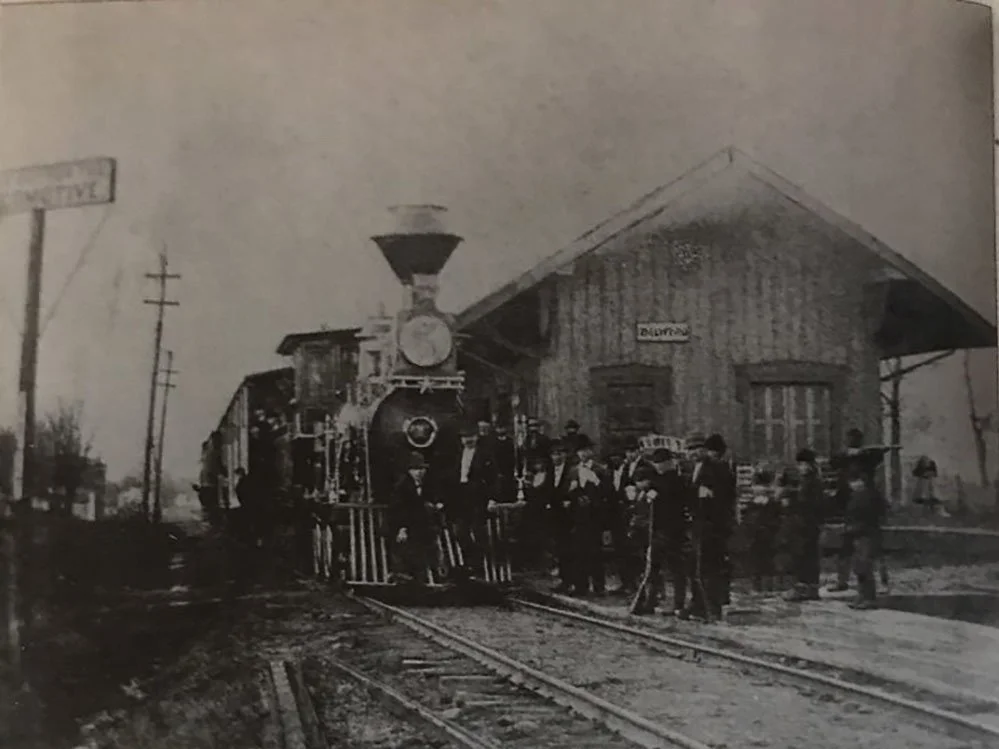
The coming of the railroad was probably the most substantial shift in the development landscape for Bedford. Ever since the establishment of the nearby canal and of various mills and factories along Tinker’s Creek, Bedford could be thought of as a place of some significance, but the railroads allowed Bedford to access the wider world like never before; it also let the world come to Bedford. Several men who at one point served as President of the United States are known to have passed through Bedford by train, namely Abraham Lincoln, James Garfield, William McKinley, Warren Harding, and Herbert Hoover.
Railroad development forced the development of more infrastructure around - especially across - Tinker’s Creek, so that trains could get over the gorge carved by the waterway. A wooden trestle bridge was first made in 1852, being replaced in 1864 by the iconic stone bridge with multiple arches called the Bedford Viaduct.
The last time Bedford’s Wheeling & Lake Erie Railway Depot was used as a stop for a passenger train was on July 16, 1938. Eventually, the underutilized depot was donated to the City of Bedford in 1986, and it has since been restored to its approximate appearance in the 1920s and sees use by the Bedford Historical Society. The heyday of the railroads may be over for Bedford as it is across the United States, but one can still easily find multiple active rail lines running just south of Bedford’s downtown today, even if the frequency of the trains has significantly declined.